Tutor Intelligence Raises $75 Million to Expand Robot Training and Deployment
- Hannah Shapiro
- 626 reads
Tutor’s $75 million funding round will support robot models, manufacturing and deployments, with real-world work feeding data back into training.
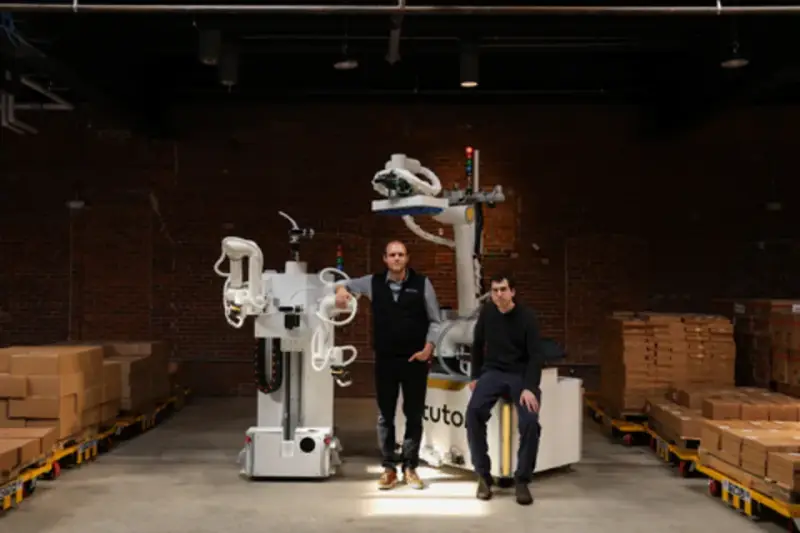
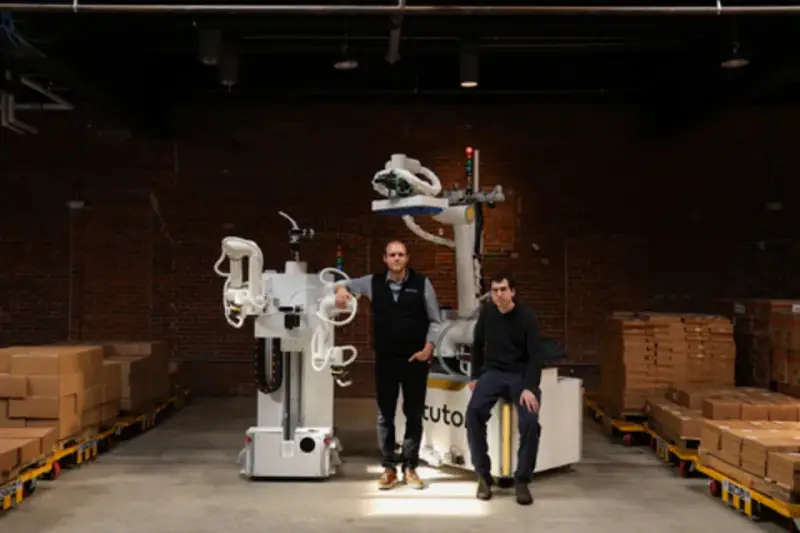
Tutor Intelligence is tying its next stage of robot development to a practical source of training data: work performed in customer facilities. The Watertown, Massachusetts, company has raised $75 million in a Series B round led by Andreessen Horowitz. It says the funding will support foundation model training, robot manufacturing and deployments of its Sonny and Cassie systems. The company has raised $117 million in total.
Union Square Ventures and Neo also participated in the round. Tutor describes itself as a robotics research and deployment company, and its approach joins three parts of the system: the robots, the models that control them, and the service that puts them to work. The intended feedback loop is straightforward: robots perform tasks, those tasks produce experience data, and the data can be used to improve the models that guide later work.
Customer work becomes training data
Robotics developers have a different data problem from teams building systems for text or images. Digital material is abundant, while examples of robots manipulating objects in varied physical settings are harder to collect. Tutor’s answer is to place internet-connected robots in production environments, where they work for customers with support from remote operators the company calls “tutors.”
Each completed task gives Tutor real-world examples of how its robots encounter and handle work. The company says that experience feeds model training, with the aim of expanding the range of tasks the robots can perform. That makes deployment part of the research process: the robots gather operating experience as they serve customers, and model updates can then inform later deployments.
There’s a practical engineering challenge in that loop. Work in factories and warehouses varies by site, product and task, so a system must deal with more than a controlled demonstration. Tutor’s description places customer operations at the center of development, with hardware, software and deployment shaped around the demands of actual work. The source does not specify model architecture, sensing hardware, task success rates or the extent of human intervention, so the scale and limits of the learning process remain unclear.
Raghu Raghuram, a general partner at Andreessen Horowitz and former VMware CEO, said Tutor’s approach starts with deployment requirements and works backward through distribution, hardware and research. He characterized learning across an expanding range of deployments as a route from narrow capabilities toward more general-purpose robotics. That is the company’s stated direction; the current examples described are lifting, moving and manipulating goods in manufacturing and logistics settings.
Robots sold as work capacity
Tutor packages its systems as work purchased by the hour or by the pick. Customers do not make an upfront robot purchase or sign a long-term contract, according to the company. Tutor handles deployment and maintenance and provides regular software and intelligence upgrades. The arrangement shifts the customer’s purchase from owning a robot to paying for completed work, while leaving hardware operation and upkeep with Tutor.
That service structure may lower the effort required for a business to try automation, especially where a task has resisted conventional robot installations. It also means Tutor must coordinate the equipment, software and ongoing support needed to deliver usable output at each facility. The company has not provided prices, contract details, productivity figures or comparisons with manual work, so the cost and performance case will depend on the task and customer arrangement.
CEO and co-founder Josh Gruenstein says the company expects its models to make a wider set of jobs practical for robots and to lower the cost of access to automation. He also pointed to demand outpacing Tutor’s current ability to build robots. Those are company claims; the reported deployment and customer figures offer a measure of the growth underway, but do not by themselves show unit economics or task-level performance.
Growth targets and operating footprint
Tutor says its robots now operate in almost four times as many facilities as they did a year earlier. It is aiming to have more than 1,000 robots under contract by the end of 2027. The company says those robots will be built in and deployed from the United States.
Current deployments span manufacturing and logistics networks, where the robots handle goods including breakfast cereals, snacks, candy, cosmetics, home goods and toys. Nearly one-third of organizations that received Tutor robots during the past 12 months were existing customers adding more units, the company says. Repeat installations suggest some customers see enough value to expand use, though the company has not disclosed the number of facilities or robots behind that share.
The $75 million round gives Tutor resources to expand manufacturing alongside model development and field operations. The key engineering measure to watch is whether added deployment produces reliable improvements that carry across sites and tasks. If it does, the same fleet can serve as both a work system and a source of experience for the next generation of models; if performance depends heavily on each facility, scaling will require more site-specific work.