Tutor Intelligence Trains Robot Fleets on Work Done in Warehouses
- Hannah Shapiro
- 957 reads
Tutor’s remote operators teach robots during production, with fleet data feeding future models. Its Cassie and Sonny robots handle varied warehouse tasks.

Tutor Intelligence’s approach to robot learning starts with a practical question: why wait for a robot to understand a workplace before putting it to work? The company sends robots into production with human tutors available to guide them. Those interventions generate data that can train later models for the wider fleet.
That changes how the intelligence bottleneck in robotics can be addressed. Physical environments demand more than recognizing objects: robots must choose actions amid the variation and uncertainty of real work. Tutor’s approach lets people supply guidance while the task is happening, then uses the resulting examples to improve its robot foundation models.
Learning from production
Many machine learning systems rely on labeled examples, where people show a model how to interpret data or classify a situation. Tutor applies a related idea to physical tasks. When a robot needs help, a remote operator can guide it through the work. The company says its research team trains foundation models using data gathered across the fleet, allowing a lesson from one robot to inform capabilities in later model releases.
The distinction matters because a robot can begin providing value before it handles every situation independently. A human can step in when the robot encounters a task or condition it cannot yet manage, while the completed work becomes part of the training data. If that process works as described, each deployment can contribute both to the customer’s operation and to the models that support future deployments.
Tutor has built its own robots and models around this system. Its robots use mobility, LiDAR, a seventh axis and six-axis arms. The company says that this equipment, combined with its foundation models and human guidance, helps the machines fit into existing workflows. When Tutor releases a more capable model, robots already in operation can receive the upgrade.
Robots designed for different work
Tutor’s robot workers, Cassie and Sonny, are intended for tasks such as picking, towing and stacking in warehouses and other workplaces. Their forms differ: Cassie is a wheeled platform with vision and a limb for larger-scale manipulation, while Sonny is semi-humanoid and aimed at finer handwork. The range reflects a broader engineering point: a useful robot fleet may combine machines with different bodies and capabilities, rather than relying on one universal shape.
At Tutor’s Data Factory 1, 100 Sonny robots work alongside people to generate training data. The company says its Ti0 model was trained entirely on data collected at that facility. That setup makes the site both a workplace and a source of robot learning, tying model development to the activities the machines are being built to perform.
Sampriti Bhattacharyya, speaking on a panel at The Next Endeavor event in September, argued that many jobs performed at scale call for specialized machines rather than humanoids. Humanoid robots may suit some tasks, she said, but they won’t be the only form factor. Tutor’s Cassie and Sonny illustrate that range in practice: one platform is designed for wheeled mobility and larger objects, the other for more dexterous work.
Deployment and customer demand
Tutor has raised $75 million in a Series B round led by Andreessen Horowitz, bringing its total capital raised to $117 million. Union Square Ventures and Neo, both previous investors, also backed the round. The company plans to use the funding to train larger models and deploy trainable robots in customer environments.
Tutor says its robots now operate at almost four times as many sites as they did a year earlier, and it expects to have more than 1,000 robots under contract by the end of 2027. Nearly one-third of the customers who received robots during the past year were existing customers ordering additional units, according to the company. That repeat demand suggests some customers see enough operational value to expand their deployments, though the figures alone don’t establish how performance varies by task or site.
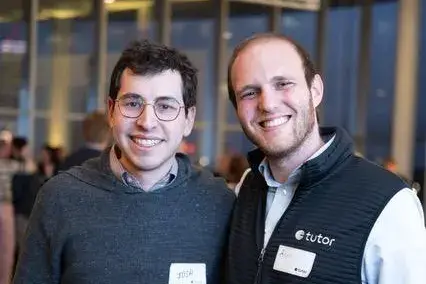
Andreessen Horowitz general partner Raghu Raghuram said his firm’s decision to invest rested first on Tutor’s founders, particularly CEO and co-founder Josh Gruenstein. Raghuram described Gruenstein as combining domain knowledge with a commercial focus, and said the company was applying robotics across the hardware, software and operational layers needed for business use.
Raghuram also highlighted Tutor’s decision to put robots to work while continuing to improve their capabilities. In his view, this can help create an operating loop in which deployed robots produce data, model improvements expand what the fleet can do, and businesses receive useful output from the start. He said the handoff between robot and human control is designed to be unobtrusive to customers. Tutor serves businesses ranging from family-owned manufacturers to large logistics companies, he added.
A wider ambition for physical automation
Gruenstein has described Tutor’s goal as bringing robots into more ordinary settings, including workplaces, grocery stores and homes. The company was founded out of MIT and has relationships with MIT, MassRobotics and other organizations in the Boston area. Gruenstein said Tutor is hiring across the United States and aims to extend its work across the country and eventually around the world.
He has also pointed to the gap between familiar fictional ideas of intelligent robots and the machines most people encounter in factories and warehouses. His argument is that the imagined version depends on capable models, suitable hardware and widespread deployment arriving together. Tutor’s method addresses those pieces through a mix of robot designs, on-the-job human guidance and models trained on data from actual work.
The practical test will be whether those lessons transfer reliably between tasks and sites, and whether human supervision can stay effective as deployments grow. Tutor’s system offers a clear route for improving robots through use: people guide machines through physical work, and the fleet’s data can shape later models. Its progress will help show how far that approach can extend across the varied jobs that make up industrial and commercial operations.
Tutor is hiring in the Boston area and across the United States. More information is available from Tutor’s careers page.