IoT Monitoring Connects After-Hours Property Alerts to a Clear Response
- IoT.Business.News
- 413 reads
Connected cameras, sensors and access controls help multifamily teams verify overnight alerts, route incidents and identify recurring building problems.
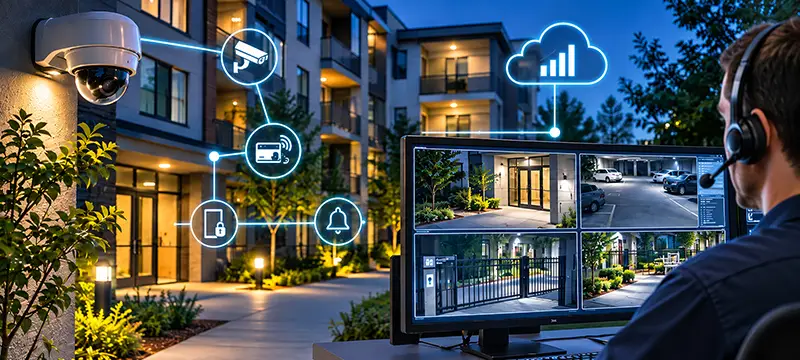
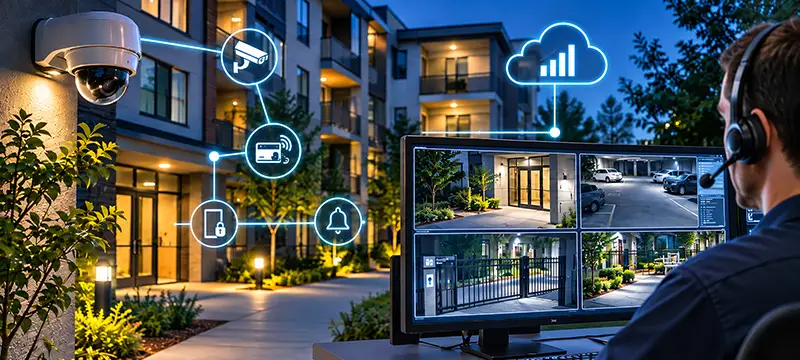
After-hours property monitoring is most useful when it turns a device alert into a verified, actionable account of what is happening. Multifamily buildings remain active after leasing staff leave: residents return, deliveries arrive, guests enter, and maintenance workers handle urgent calls. Cameras, access controls and connected sensors can help teams distinguish routine activity from an incident, provided someone can assess the alert and follow a defined response plan.
That makes live monitoring an operational layer over a building’s connected equipment. Cameras and sensors report activity; analytics can flag events that match preset rules; and trained monitoring agents review the associated video. When an event needs attention, agents follow instructions set by the property, such as contacting an on-call manager or using a connected speaker to issue a warning. For multifamily communities, live monitoring services can provide that review during periods when on-site staffing is limited.
Verification reduces the burden of overnight alerts
A motion notification from a garage camera does not explain whether a resident is unloading shopping or someone is checking car doors. Property employees cannot reasonably investigate every alert, especially overnight. If irrelevant notifications accumulate, staff may start ignoring them, which can slow attention to a meaningful event.
Depending on the system, video analytics may run on the camera, on a local gateway or through a centralized platform. The software identifies activity according to rules configured for the site, while a monitoring agent checks the live feed before escalating. That human review adds context to the machine’s initial flag and helps keep routine events from being treated like confirmed incidents.
The practical aim is to extend coverage without making leasing or maintenance staff responsible for watching screens throughout the night. A maintenance technician can remain available for urgent work without also having to evaluate every movement alert. The monitoring process is only useful, though, if its handoff to property staff is clear and timely.
Response plans must be specific
Connected equipment can detect activity and send notifications, but it cannot decide on its own who should respond or what steps are appropriate. Monitoring agents need property-specific instructions for common events, including who to contact, when to use an audio warning and what information to record. A general instruction to call someone when something looks suspicious leaves too much to interpretation during a time-sensitive event.
For unauthorized entry, an agent might review the relevant camera or access-control event, warn the person through a connected speaker if appropriate, and contact the designated manager. Amenity use after closing may call for confirming occupancy, giving a reminder and documenting the event. Vehicle concerns require observing and recording relevant details before escalating apparent break-in activity. For a medical emergency, instructions can direct the agent to contact emergency responders and provide the person’s visible location. A door-position alert can also notify designated staff when a door is propped open, so they can check it and restore secure access.
These examples depend on the property’s own procedures and the circumstances visible to the agent. Contact lists need regular review, too. If a manager’s number is outdated, even a well-designed escalation sequence can fail at its first handoff. Linking the monitoring platform with property workflows may help route incidents, as long as responsibilities and contact details stay current.
Video and sensor data can help responders orient themselves
An alarm reports that an event occurred; live video can help show what is happening at that moment. When available feeds are considered alongside timestamps, access events and sensor readings, monitoring staff may be able to identify where an incident began and how it is progressing. On a large site with multiple buildings, parking levels and shared spaces, location details can make a report more useful.
For example, knowing that someone entered a particular stairwell gives staff a clearer lead than a general alert that there is activity in the garage. Video may also show whether someone appears injured or which entrance responders should use. The Occupational Safety and Health Administration’s emergency preparedness guidance covers notification, evacuation and accounting for people. Monitoring can support those wider procedures by passing along verified observations; it should operate within, rather than take the place of, the property’s established emergency arrangements.
Equipment health and privacy need ongoing attention
Monitoring reports can help managers assess both the service and the building. Reviewing incidents may show whether agents followed the escalation plan, whether on-call staff received useful details, and whether alerts cluster around a particular gate, package room or parking entrance. A repeated alert may point to a physical fault, such as a failing latch, poor lighting or landscaping that blocks a camera’s view. Recurring garage access issues may also suggest that credentials are being shared or gates are being held open.
The system depends on functioning infrastructure. IP cameras and gateways need reliable network connections, correct timestamps, adequate power and routine maintenance. Device-health monitoring can flag a camera that has gone offline, a data stream that has stopped or equipment that has developed a fault. Finding those issues before an incident can prevent gaps in coverage from going unnoticed.
Privacy and cybersecurity are part of the same operational picture. Property operators need to control who can view footage or manage devices, keep software updated, and set appropriate access and retention rules for recordings. Treating cameras, sensors and access controls as part of the building’s wider connected environment helps teams manage their dependencies and permissions coherently.
Connect detection to a reliable handoff
Live monitoring combines device data, analytics, human review and a property-defined response. Recorded video remains useful for later investigations and resident disputes; access control continues to manage entry to secured areas. Live assessment adds a way to verify events when staffing is thin and a prompt decision may matter.
For property teams, the value comes from coordinating those functions rather than simply adding more connected devices. Clear escalation instructions, current contact information, maintained equipment and regular review of incident patterns turn alerts into operational information that people can act on.