MassRobotics Connects Robotics Startups With Space, Partners and Practical Support
- Hannah Shapiro
- 612 reads
The Boston nonprofit has supported more than 250 robotics startups, whose companies have raised nearly $3 billion and created over 1,500 jobs.

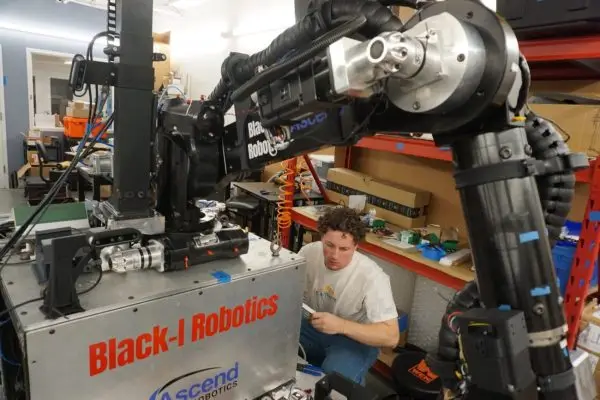
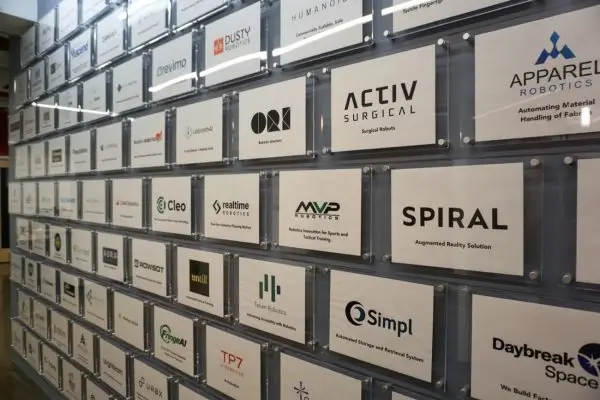
Robotics startups need more than a promising machine design. They need room to build and test hardware, access to experienced partners, and ways to connect with customers and talent. MassRobotics was set up to bring those resources into one place. The Boston nonprofit says it has supported more than 250 startups through workspace, laboratories, accelerators, workforce programs and industry connections.
Its model is built around convening companies and people who often work in separate parts of the robotics field. Co-founder and Chief of Operations Joyce Sidopoulos describes the organization as a founder-first, independent hub: it doesn’t fund resident startups or take equity from them. Instead, it offers a shared platform intended to help companies develop and commercialize robotics technologies.
Building a home for a fragmented field
The roots of MassRobotics go back to the robotics community convened by the Mass Tech Leadership Council. Sidopoulos joined that organization in 2012 as Robotics Cluster Manager; Tom Ryden, now MassRobotics’ Executive Director, was a co-chair of the cluster. Their work with companies, researchers and educators across Massachusetts showed them both the depth of local expertise and the difficulty of connecting it.
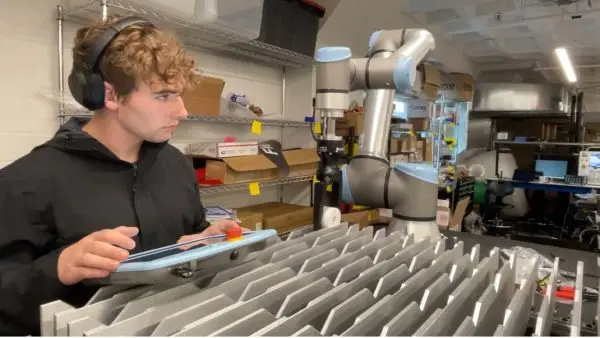
One gap stood out: the area had strong robotics talent but no central place where startups, established companies, investors and academic groups could meet and share resources. Hardware development can require costly equipment and working space, needs that are difficult for an early-stage company to meet on its own. The idea was to make tools and facilities available across a community of startups, while also creating more routes to collaboration.
Those discussions led to MassRobotics being formally established as a nonprofit in 2015. Sidopoulos recalls that support from the City of Boston helped turn the proposal into a physical hub. She names that backing as a defining moment, alongside watching young companies progress from early concepts to raising funding and creating jobs.

A shared platform, rather than a product company
MassRobotics doesn’t build a single robotics product. Its role is to provide infrastructure and connections that can help many companies move forward. Startups can rent flexible workspace and lab facilities on a monthly basis, and the organization also runs accelerators, fellowships and workforce development programs. Corporate partnerships and opportunities for international collaboration broaden the network around those efforts.
That mix matters because a robotics company may need different kinds of help as it grows. A team building its first hardware system may value lab access and a working community; a company preparing to reach customers may need introductions, mentorship or greater visibility. Sidopoulos says residents have used the hub’s mentorship, partnerships and connections to build commercial traction, secure funding and expand their businesses.
The organization says startups in its community have collectively raised close to $3 billion in venture funding and created more than 1,500 jobs. These figures describe the startups’ combined activity, rather than MassRobotics’ own revenue or funding. As a nonprofit, MassRobotics is supported through corporate partnerships, sponsorships and program funding.
Keeping stakeholders in the same room
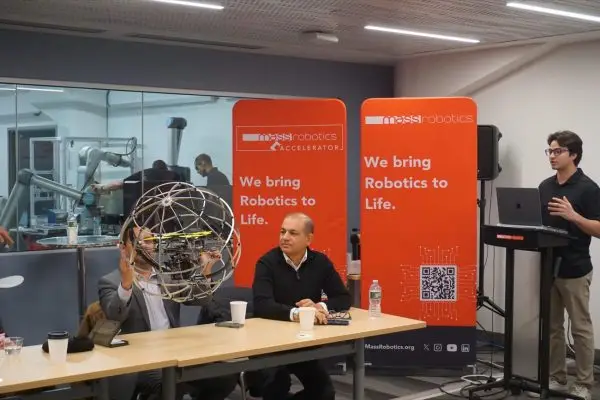
Fragmentation remains a challenge in robotics. Companies work across different industries and technical areas, while researchers, customers and other participants bring different priorities. MassRobotics aims to reduce those divisions by offering a neutral, nonprofit place for collaboration, including between companies that may compete in the market.
Sidopoulos sees that independence as central to the hub’s role. The organization is intended to serve startups, established companies and academic groups across the ecosystem, rather than advancing the interests of one corporate sponsor or taking ownership in the startups it hosts. The combination of shared space, practical support and industry connections is designed to make cooperation easier while companies retain control of their own work.
She traces a change in the technologies represented in the community, too. Early activity concentrated on core robotics systems and hardware. Today, startups are also working on physical AI, autonomous systems and advanced sensing. MassRobotics has expanded its partnerships and programs as those areas have grown, with the stated aim of helping teams bring their technologies to market faster.
Growth, reach and the next stage
MassRobotics identifies several milestones: its formal establishment in 2015, the launch of its hub in 2017, and the development of what Sidopoulos describes as the world’s largest independent robotics hub. The organization has also added accelerators and international partnerships, and hosts public events including the Robot Block Party and the annual Women in Robotics Medal.
Its reach reflects the range of work robotics touches. The community includes companies in manufacturing, healthcare, logistics, mobility, construction, climate technology, marine applications and agriculture. Sidopoulos points to physical AI and automation as areas widening the opportunity, but MassRobotics doesn’t pursue a single defined market. Its function is to support companies across this spread of applications.
Sidopoulos’ own route to the role spans engineering and business development. Before co-founding MassRobotics, she led robotics and innovation programs at the Massachusetts Technology Leadership Council and worked in business development supporting contractors at Hanscom AFB and MIT Lincoln Laboratory. She began her career as a sonar signal processing engineer, leading research and development work. She says that across these roles, connecting people and helping emerging technologies succeed has remained a consistent focus.
For the next stage, MassRobotics plans to broaden its international reach, strengthen the robotics workforce and support development and commercialization of physical AI. Sidopoulos also emphasizes the internal culture behind the hub: prioritizing startups, building trust and empowering the team. For engineering founders, the practical measure of that approach will be whether shared facilities and relationships help move a system from early development toward real-world use.