Connected Home Medical Monitoring Devices Could Reach 159.7 Million by 2030
- IoT.Business.News
- 440 reads
Berg Insight projects 11.5% annual growth as remote monitoring expands across sleep therapy, diabetes care and cardiac monitoring.
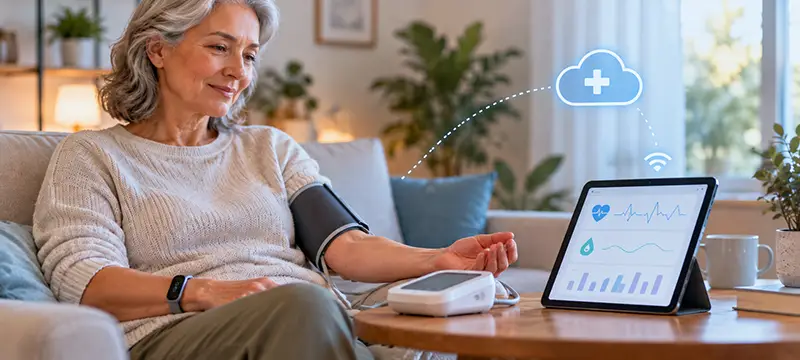
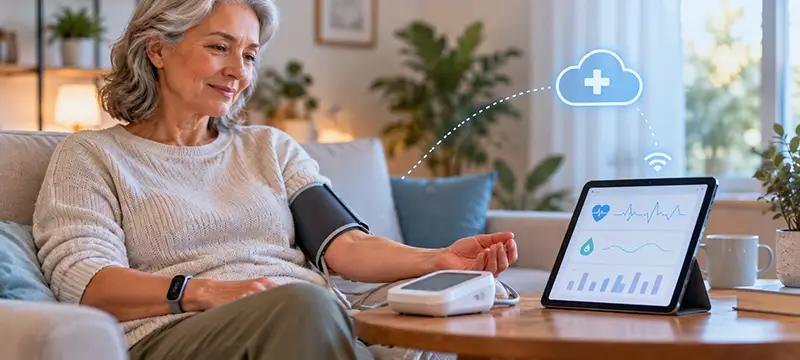
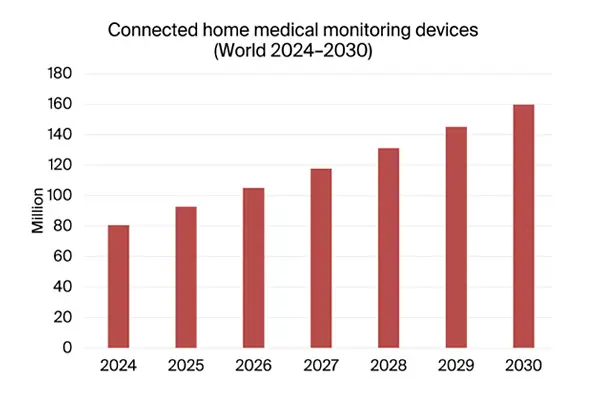
Remote medical monitoring is growing into a connected system of devices, software and clinical services. Berg Insight estimates that 92.7 million connected home medical monitoring devices were in use worldwide at the end of 2025, and projects the installed base will reach 159.7 million by 2030. That forecast corresponds to a compound annual growth rate of 11.5%.
The count covers medical devices used by patients enrolled in structured care programmes. It excludes consumer fitness trackers and personal wellness devices outside prescribed care. That boundary makes the estimate a measure of clinical monitoring activity, rather than a count of the much broader wearable device market.
The main engineering and service challenge is shifting with that growth. Measuring a patient’s condition at home is only one part of the job; care teams also need dependable data delivery, useful presentation of results and a way to fit monitoring into existing clinical workflows. The value of a connected device therefore depends partly on what happens after it sends a reading.
Established applications anchor the market
Sleep therapy remains the largest application area. ResMed holds a dominant position, while Philips, BMC Medical and Löwenstein Medical Technology are among the other manufacturers in the segment. The number of remotely monitored sleep therapy patients has more than doubled since 2018. Berg Insight attributes much of that increase to treatment compliance monitoring requirements introduced in the US and Europe.
Diabetes management is the second-largest segment, with 19.5 million connections worldwide in 2025. Wider use of continuous glucose monitoring (CGM) and connected insulin delivery systems is supporting this category. Companies active in these products include Abbott, Dexcom, Insulet, Tandem Diabetes Care and MiniMed.
Implantable cardiac rhythm management (CRM) is another established use. Medtronic, Abbott, Boston Scientific and BIOTRONIK have incorporated connectivity into implantable devices for more than two decades. Remote access to device information gives care teams a way to monitor patients between in-person visits, while making data handling and integration part of the device ecosystem.
Looking towards 2030, Berg Insight identifies diabetes management, remote electrocardiogram (ECG) monitoring and medication compliance monitoring as categories expected to grow fastest. The forecast points to a widening set of monitored conditions, each with its own measurement needs and care processes.
Platforms connect readings to care
As deployments expand, software and service platforms are taking a larger role alongside medical hardware. Companies including Huma Therapeutics, Doccla, Teladoc Health, CareSimple and Current Health provide platforms for collecting, analysing and managing patient information in remote care programmes.
For device makers and IoT providers, this changes what a complete deployment has to deliver. A connected sensor or implant can generate measurements, but clinicians need those measurements brought together, displayed in a useful form and delivered through systems that support their work. A patient using multiple device types may generate information that needs to be handled across more than one care provider or programme.
That makes interoperability and reliable data delivery practical design concerns. Device makers, platform operators, system integrators and connectivity providers all contribute to the path between measurement and clinical use. Breaks in that path can reduce the usefulness of the data even when the monitoring hardware itself works as intended.
Different devices also operate in different patient environments and collect different kinds of information. Sleep therapy equipment, glucose monitors and cardiac devices cannot be assumed to have identical data requirements. Remote care systems must accommodate those differences while giving medical professionals a coherent view of the information relevant to a patient’s care.
More data raises the bar for useful analysis
Artificial intelligence and machine learning are drawing attention as health organisations look for ways to interpret the growing volume of remotely collected information. Berg Insight says these tools can help identify early signs of patient deterioration, support clinical decisions and enable more proactive interventions outside traditional care facilities.
Analysis has to serve a clear clinical purpose. Continuous monitoring can produce a more detailed picture of a patient’s condition, but additional readings are useful only when professionals can interpret them and act appropriately. The system must help distinguish relevant changes from routine variation, while fitting the information into the decisions clinicians already make.
My read is that the forecast reflects a transition from connected devices as standalone products towards integrated home monitoring systems. Medical hardware, connectivity, software and analytics all have to work together within routine patient care. As the installed base grows, the practical measure of progress will be whether these systems deliver dependable, clinically useful information across conditions and care settings.
Further details are available in Berg Insight’s mHealth and Home Monitoring report brochure.


