CNC Router Cutting Depth: Practical Step-Downs by Material and Tool
- [email protected] (Laguna Tools)
- 558 reads
CNC router depth depends on rigidity, tooling, material and chip load. Practical starting ranges help balance cut quality, tool life and cycle time.
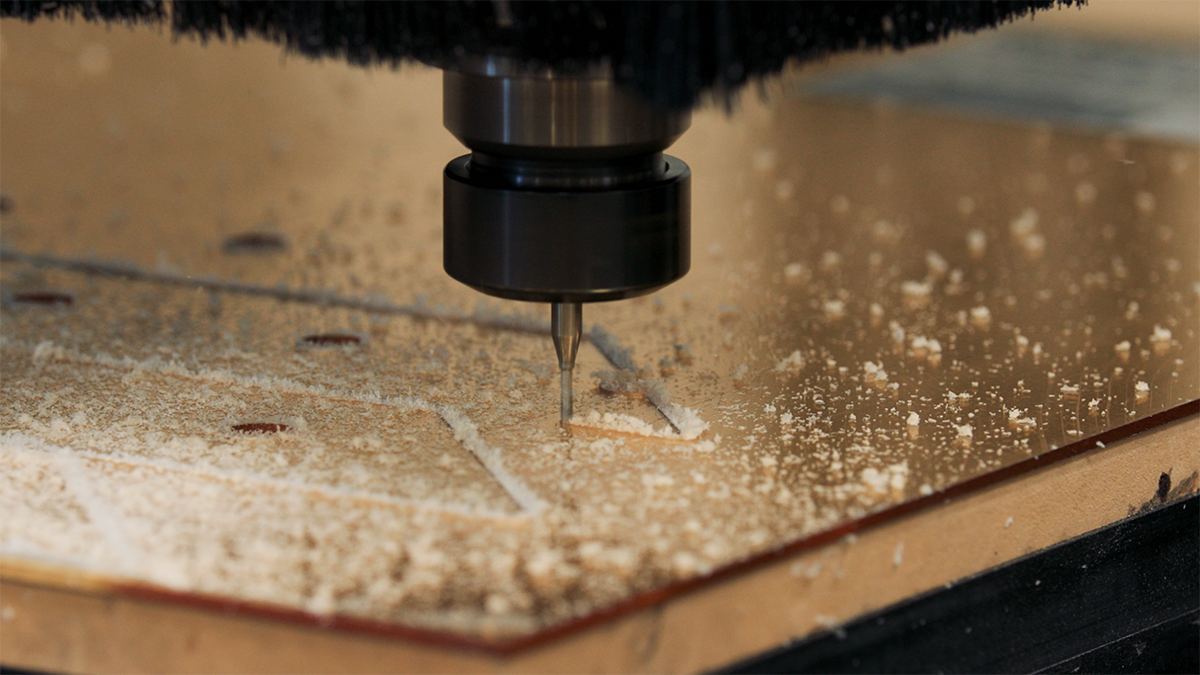
Cutting deeper can reduce the number of CNC router passes, but the usable depth is set by the whole cutting system: machine rigidity, bit geometry, material, feed rate, spindle speed and workholding. A pass that exceeds one of those limits can bring chatter, deflection, poor finish or a broken tool. The bit’s rated cutting length gives a theoretical boundary; it doesn’t tell you how deep to cut cleanly in one pass.

Start with the material and machine
A common production starting point is a step-down no greater than one times the bit diameter per pass. That means a 1/4" bit might start at 1/4" per pass, and a 1/2" bit at 1/2". Softer materials such as foam and MDF may permit deeper cuts. Hardwood and metal generally call for shallower ones. These are starting values, not guarantees: the actual limit depends on the specific machine, tool condition, material and setup.
Machine rigidity is a major constraint. An industrial router with a stiff frame can usually withstand greater cutting forces than a light benchtop machine. Flex in the gantry, Z-axis carriage or spindle mount can reduce the depth at which a cut remains clean. Published machine specifications alone may not capture the rigidity of a particular installation.
Spindle power also affects how much material the machine can remove without bogging down or overheating. But power and depth can’t be considered separately from RPM and feed rate. Their relationship determines chip load: the amount of material each cutting edge removes. Set them poorly and the tool may rub, compress material or generate excess heat instead of making clean chips.

Workholding and machine stability complete the setup. A moving or vibrating workpiece is likely to chatter and leave surface defects under heavier cuts. A machine that isn’t firmly mounted and level may also perform less rigidly than its design suggests. Deeper passes magnify weaknesses across the setup.
Choose tooling for depth and chip removal
Bit diameter and cutting length both shape the practical limit. Larger diameter bits resist bending better than smaller ones under comparable cutting forces. A long bit can reach deeper, but it also deflects more. As a general guideline, practical cutting depth is often 50 to 75 percent of the bit’s available cutting length; using the full fluted length in one pass raises the risk of deflection and poor cut quality.
Bit geometry matters too. Upcut spirals pull chips out of deep pockets, helping keep debris from building up around the cutter. Compression bits combine upcut and downcut sections, and need the through-cut depth to engage both geometries properly. For deep cuts, larger diameter carbide upcut spirals with relatively short cutting lengths are a deflection-resistant choice. Compression bits suit sheet through-cuts where a clean edge on both faces matters.
If parts repeatedly come out undersized or show a taper through the cut, the bit may be flexing. Excessive depth or a diameter too small for the forces involved can cause that deflection before a tool breaks.
Use material-specific starting ranges
For softwoods such as pine and cedar, a step-down of 1 to 1.5 times the bit diameter may be achievable with sharp tooling on a rigid machine. For hardwoods such as maple, walnut and oak, 0.5 to 1 times the diameter is a more conservative starting range. MDF’s uniform composition can support deeper passes than solid hardwood, though it produces fine dust that needs active removal. Production shops commonly cut through 3/4" sheet goods in two or three passes.
Acrylic and HDPE typically call for 0.5 to 1 times the bit diameter per pass, using a single-flute or two-flute bit intended for plastics. Heat is often the limiting factor. If the cutter melts material instead of producing chips, or chips re-weld to the tool or cut edge, reduce depth or increase feed rate to improve chip formation.
Foam’s low cutting forces allow relatively deep, fast passes. Carbon fiber and fiberglass behave differently: they abrade tools quickly and call for conservative depths. Dust control with these composites is a safety requirement as well as a way to protect cut quality.
For aluminum, brass and copper, use much more conservative settings than for wood. On a rigid router with suitable non-ferrous tooling and active chip evacuation, 0.25 to 0.5 times the bit diameter is a reasonable starting step-down for aluminum. Wood-style depths can break tooling in metal.

Set the cut, then check the result
Begin with a conservative step-down: about one bit diameter in wood, 0.5 times the diameter in hardwood, and 0.25 to 0.5 times in metal. After changing depth, recalculate feed rate to maintain the intended chip load. Increasing depth while leaving feed unchanged raises cutting force and can accelerate tool wear or degrade the finish.
For a balance of material removal and surface quality, use more aggressive roughing passes followed by a lighter finishing pass. Test new materials, bits and setups in scrap before starting production. A brief test cut can reveal whether the machine, tool and feeds are working together as expected.
Deeper passes also increase the need for secure hold-down across the workpiece, firm tool-holder seating and sound fixture mounting. Check spindle drawbar tension and other connections before demanding cuts. Loose connections add vibration and deflection. In deep pockets, use active chip removal: debris left in the cut can be recut, increasing heat and cutting forces. Air blast and spindle-mounted dust collection can help clear the path.
Watch and listen while the machine cuts. Chatter, excessive vibration, a labored or hot spindle, smoke, a burning smell, tool breakage or a wavy finish all point to trouble. Stop and diagnose if the cut sounds or looks wrong. Vibration that continues unchecked can escalate, while parts that become undersized or tapered may signal deflection even before other symptoms appear.
Common deep-cut cases
A 1/2" upcut spiral carbide bit on a rigid machine can cut through 2" hardwood over four to eight passes, depending on machine rigidity and wood species. Trying the same cut in one or two passes risks chatter, deflection and tool failure. Multiple passes generally provide more predictable results and a better surface.
Standard production router bits typically have 1" to 2" of cutting length. Extended-reach bits can cut deeper, but their added reach makes them more prone to deflection, so they call for more conservative step-downs. Keep the distinction clear: maximum cutting length describes how far the flutes extend, while practical depth per pass describes what the whole setup can cut cleanly.
The useful limit is the depth at which the bit clears chips, the machine holds its path, and the spindle and workholding stay stable. When a cut starts to chatter, burn or taper, reduce the load and check feeds, speed, tooling and chip evacuation before raising depth again.


