Boston Logan Robotics Showcase Targets Airport Bottlenecks from Baggage to Runway Inspection
- Hannah Shapiro
- 810 reads
Nine startups demonstrated robots for airport mobility, cleaning, baggage handling and airfield work as Massport outlined operational needs.
Boston Logan’s limited space puts a premium on doing more with existing airport infrastructure. At a November 9, 2026, event at the airport’s Rental Car Center, Massport leaders described operational problems that robotics might help address, while nine startups presented systems for tasks ranging from baggage handling to runway inspection.
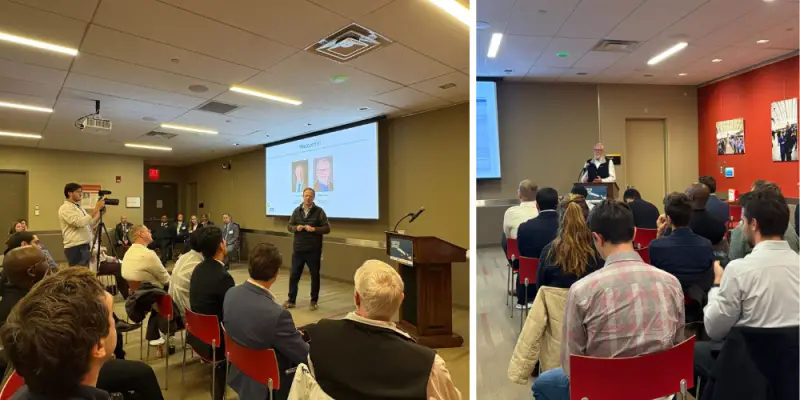
MassRobotics, Massport, Mass Mobility Hub and Massport Next organized “Robots in Airports” to connect airport operators with companies developing automation. The program paired operational briefings with startup demonstrations, an introduction to Massport Next and a tour of the airfield.
Space and throughput shape the need
Massport operates Boston Logan International, Worcester Regional and Hanscom Field. Logan is the region’s international gateway; in 2025 it handled 43 million passengers, served 56 airlines and offered 154 destinations. Its economic impact was put at roughly $25 billion. Worcester provides regional air service for Central Massachusetts, while Hanscom supports business and general aviation and helps relieve pressure on Logan.
Sharon Williams, Massport’s Executive Director of Aviation, emphasized Logan’s physical constraints: the airport occupies 1,700 acres and serves about 25,600 passengers per acre. That density is more than twice Chicago O’Hare’s and roughly ten times Denver’s. With passenger numbers expected to exceed 53 million in the next decade, the airport cannot rely on outward expansion. Williams pointed to operational efficiency, infrastructure improvements and strategic investment as ways to accommodate growth, making automation a potential part of the response.
The operational briefings made clear that a useful airport robot has to work within crowded, changing environments. Dave Ishihara, Deputy Executive Director of Aviation, identified operations, staffing, distance, crowding and equipment use as factors complicating baggage work at Logan. Aircraft, ground equipment and people all share constrained space across the curb, terminals and ramp.
Different airports, different maintenance demands
Worcester’s challenges combine seasonal passenger surges with routine airfield upkeep. Robert Lynch, Director of Aviation Operations & Security, said traffic rises about 45% above an average month during winter and spring breaks, putting pressure on parking. The airport also maintains 12 miles of perimeter fencing across difficult terrain. Its 500 in-pavement airfield lights each have six bolts that staff torque-check by hand. At about 1,000 feet of elevation, snow, ice and fog can differ from regional forecasts.
At Hanscom, Chris Willenborg, Director, described an airport with existing aviation development activity, including a Merlin Labs flight test center, Beta Technologies electric aircraft charging, and runway safety testing with the FAA and Saab. Its 1,300 acres of grassland and varied terrain complicate wildlife monitoring. A separate inspection problem lies underground: 29 miles of drainage piping are difficult to examine.
Other briefings covered passenger support, emergency response, information technology and safety. Mia Healy-Waldron, Deputy Director of Customer Service, described existing AI wayfinding, digital information and handheld translation tools, alongside interest in autonomous mobility and crowd monitoring. The practical challenge is providing timely, consistent, personal assistance across a large airport whose conditions keep changing.
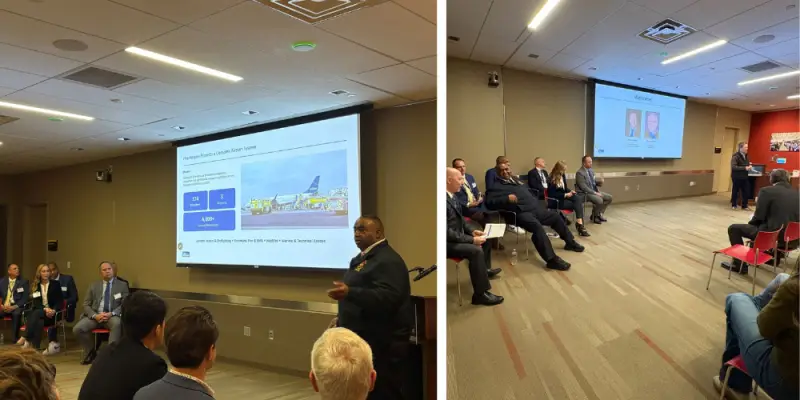
Massport Fire-Rescue’s 174 members handle more than 6,000 calls each year across the three airports, including maritime, hazardous-material and technical-rescue incidents. Fire Chief Joseph DeGrace highlighted tools that could assess dangerous or hard-to-reach spaces before responders enter, improve searches in smoke or underwater, and give incident commanders a clearer live view. CIO Jarett Wright described IT’s shift toward working with business units on innovation, data and responsible AI. Chief of Security Hank Shaw outlined the layered work involved in protecting people and assets while keeping airport operations moving.
Nine systems address four work areas
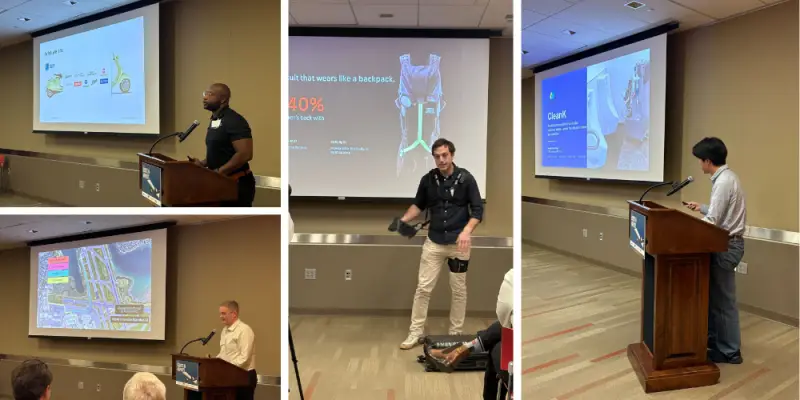
The showcase selected nine startups from dozens of applicants. For passenger mobility, A&K Robotics presented Cruz Mobility Pods, autonomous vehicles intended to give travelers with mobility needs an independent route to their gates. The company said paid trials with major airport operators have recorded no safety incidents and very high passenger satisfaction. Piaggio Fast Forward demonstrated kilo, a flatbed cart that follows a person, carries up to 300 pounds and requires no mapping or training to start.
Cleaning and waste sorting drew two more demonstrations. CleanK, from inprog USA, showed a robot that scrubs toilets beneath the rim and below the waterline. Restrooms account for about 40% of cleaning time while occupying around 5% of floor area, according to the figures presented. CleanK has piloted at Tokyo Innovation Base and is testing at Haneda Airport’s operator test field. rStream applies AI vision to waste sorting, a task that can become more demanding during travel peaks. At Gillette Stadium through the FIFA World Cup, the company reported recovering 479,000 recyclables across seven matches with about 99% sorting accuracy.
For baggage and ramp work, Verve Motion presented SafeLift, a powered exosuit worn like a backpack. It is designed to take up to 40% of the strain off a baggage handler’s back; in trials with International Airlines Group, 95% of handlers preferred working with it. Airtrek Robotics automates wingwalking, the manual monitoring of wingtip clearance during towing and pushback. Its robots are operating with a fixed base operator at Oakland County International Airport, where they have completed more than 70 tows. Oxcart is developing a high-speed, semi-autonomous electric aircraft tug intended to reduce fuel burn, noise and turnaround time, and is seeking a test at Hanscom.
Airfield maintenance systems rounded out the group. Oreyeon’s Runway Surface Monitoring System mounts on autonomous vehicles to detect foreign object debris and pavement damage. The company reports accuracy above 95% in day or night conditions and says the system has been trialed at major civil airports in Europe. Snowbotix demonstrated SMUR X1, an electric-hybrid tracked robot with nine swappable attachments for work including snow removal, mowing, debris sweeping, wildlife deterrence and vegetation clearing along perimeter fences. It has logged more than 1,000 uncrewed hours, with deployments at Gerald R. Ford International and Denver International.
A route from demonstrations to airport trials
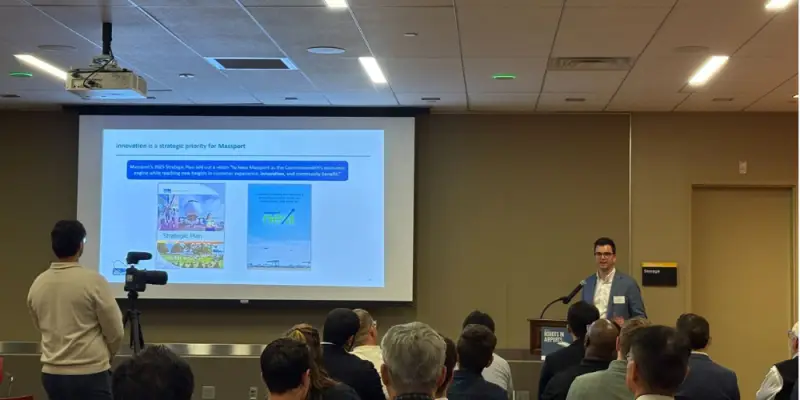
Conor LeBlanc, Assistant Director of Economic Development at Massport, introduced Massport Next as an entry point for startups and industry partners, from an initial discussion through a pilot program. Innovation is one of the priorities in Massport’s 2025 Strategic Plan, and the initiative is intended to align projects across Massport’s business lines, which include sustainable aviation fuel and blue technology. The team is seeking proposals through its open Call for Innovation and can be reached at [email protected].
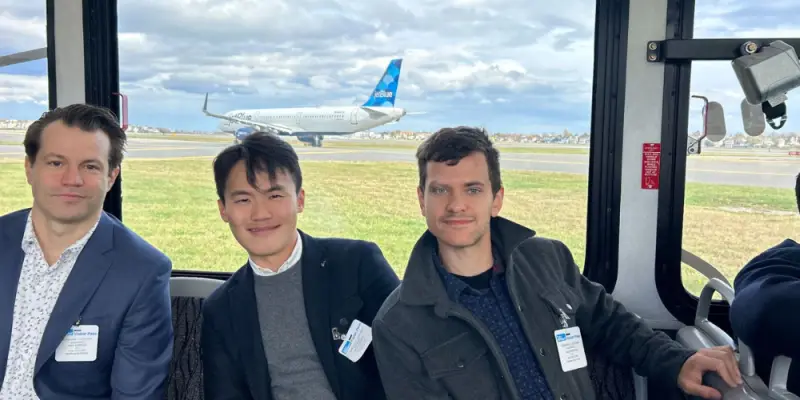
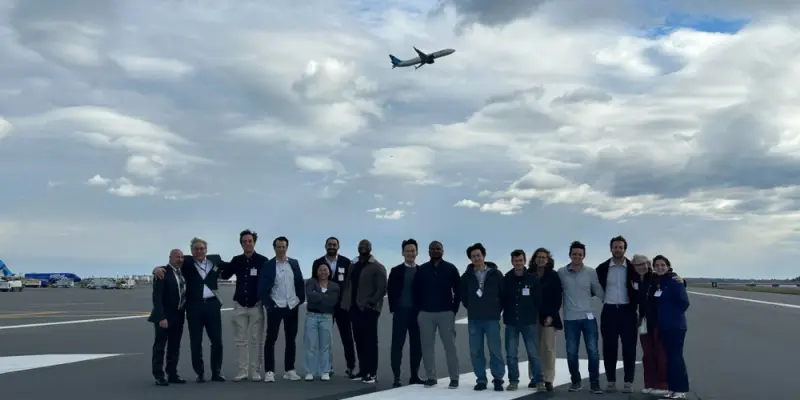
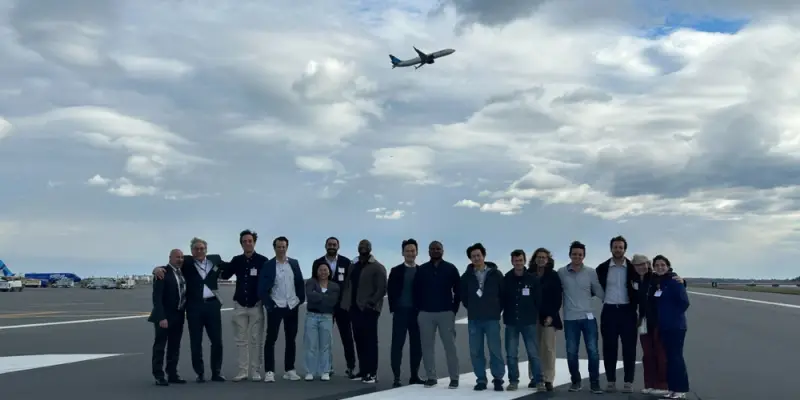
A Massport Operations team led the presenters and MassRobotics staff on an airfield tour. Seeing aircraft activity on the ramp and the extent of the inspection and maintenance work gave the technology teams a closer view of the conditions their systems would need to handle.
The demonstrations covered distinct jobs, but the shared engineering test is whether each system can fit into crowded operations and deliver reliable help under real airport conditions. Massport Next offers a path to explore that fit through pilots; the next evidence will come from how the systems perform in the specific spaces and workflows the operators described.