DMC Chicago Uses Teamwork and Misdirection to Solve a Masquerade Mystery
- Hannah Overhiser
- 401 reads
DMC Chicago employees traded engineering problems for character clues and competing theories at an interactive masquerade mystery event.
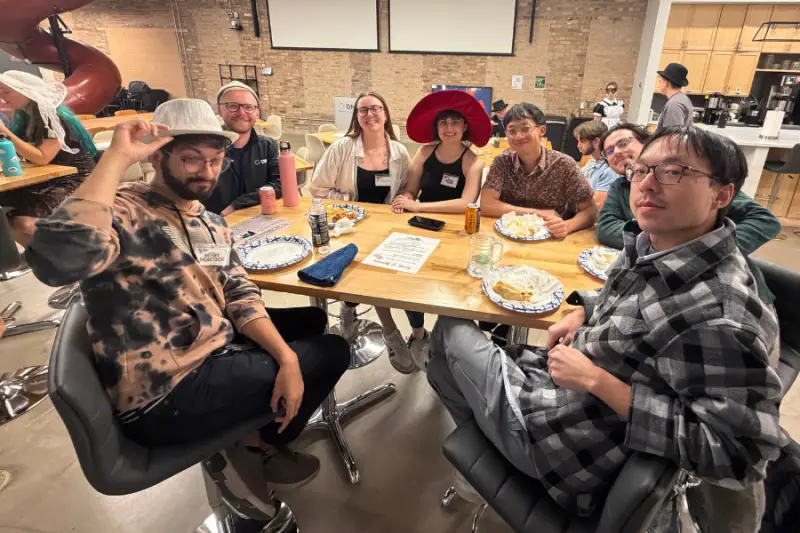
DMC Chicago’s Halloween season brought a team problem with no engineering drawings: identify which guest in a fictional masquerade story was responsible for a billionaire’s death. The after-work event asked employees to compare clues, question characters and decide which details added up. Only one team reached the right answer.
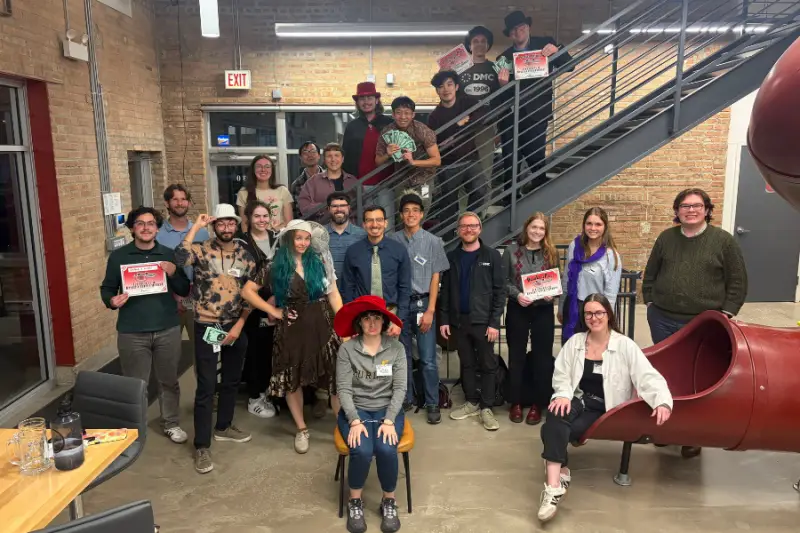
Hosted by The Murder Mystery Company, the event placed attendees inside Midnight at the Masquerade, a story set at the Billionaires’ Club Annual Masquerade Ball. Costumes, scripted characters and staged misdirection gave teams a shared puzzle to work through. The format made communication part of the challenge: a clue held by one person might change how someone else interpreted a suspect’s motives.
Characters supplied the clues
Seven characters shaped the evening: an actress, a married couple, an eccentric billionaire, a bachelor, a butler and a doctor. Each received a costume piece to make their role recognizable. The actress wore a bright red hat; the billionaire, played by DMC IT Specialist RJ Hughes, wore a bowler hat and hosted the fictional ball.
One person from each team took on a character, receiving a script with that role’s motives and information to reveal as the scenarios unfolded. Everyone else could trade clues, question the characters and decide which leads deserved attention. Teams also had room to influence the conversation by directing suspicion toward or away from particular guests.
That mix of scripted information and open discussion created two parallel tasks. Teams had to gather enough details to form a theory, then persuade one another that their interpretation was plausible. A convincing explanation could still be wrong, and a confident character could still be leading the group astray.
Investigation met improvisation
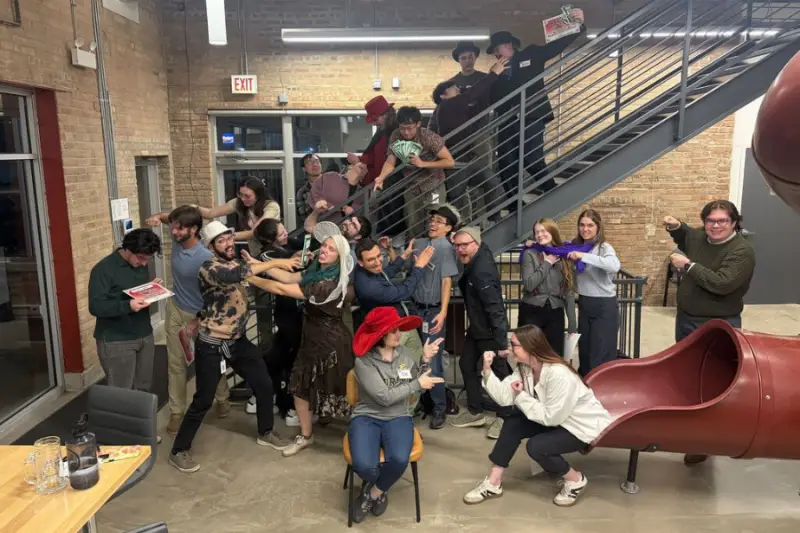
Some groups approached the puzzle as a focused investigation. Others leaned into performance and tried to steer their competitors toward the wrong suspect. DMC employee William Chen said his group, Team Mort, committed to the theory that the wife of his character had done it. Their theory was mistaken, though the group managed to cast suspicion on an innocent character.
Chen described teams exchanging money for information about other characters. Once a group believed it had enough details, it could name the person it thought was responsible. The exchange gave teams a practical reason to compare what they had heard, rather than treating each character’s account as a complete explanation on its own.
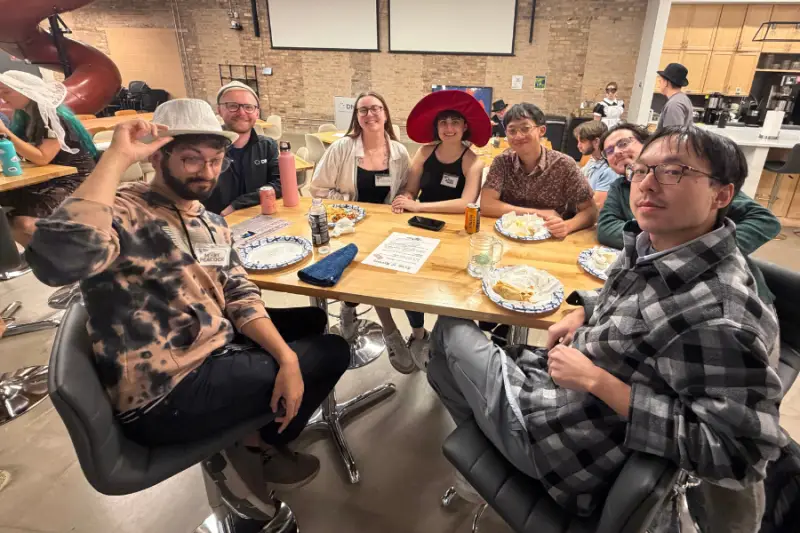
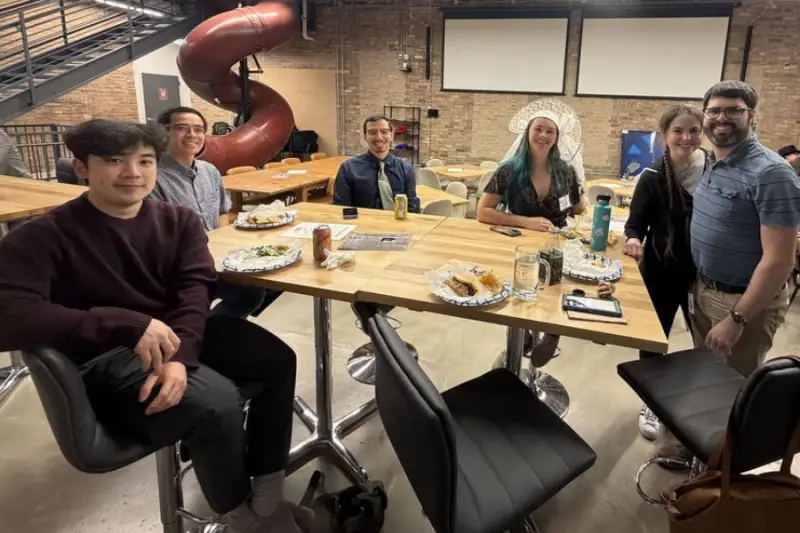
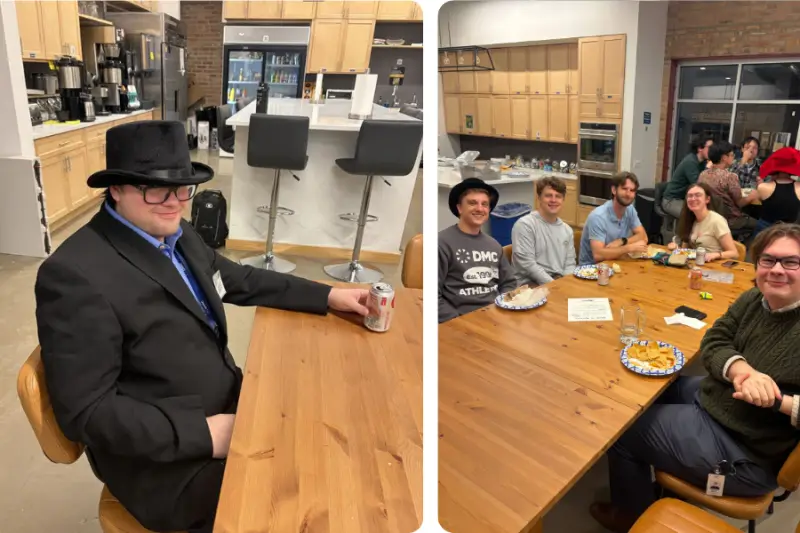
In that respect, the game rewarded more than clue collection. Teams had to decide whether information was reliable, notice how separate details fitted together, and settle on a shared account of events. Those are familiar group skills, even when the work setting is a staged mystery rather than an engineering project. Here, though, the pressure was social and playful: participants could make a case, defend a character or simply make the wrong theory entertaining.
The wrong answer had its own prize
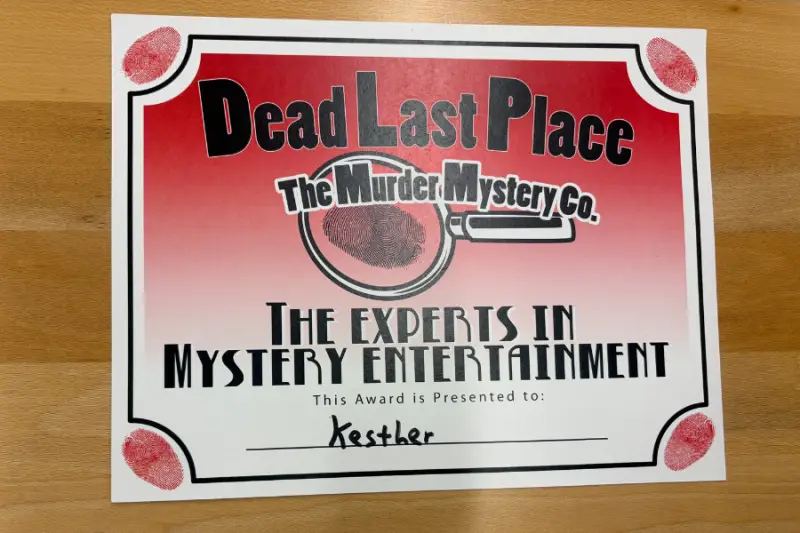
Only one team correctly identified the person responsible. Another received a certificate for the “worst guess,” recognizing a particularly inaccurate attempt. That outcome suited an event where bluffing and comic reasoning were part of the experience, not just obstacles to reaching the solution.
Kaitlyn Heistand, a member of DMC Chicago’s Admin team, praised the actors’ ability to keep the experience engaging. She also enjoyed seeing coworkers who were usually more reserved take on their roles. Heistand and another attendee, Esther, spent so long building a funny explanation for their guess that they gave less time to working out who had actually done it.
The reveal, and the team takeaway
The fictional culprit was the Actress, played by Gabrielle, the wife of Embedded Engineer John Nicholas. Many partygoers hadn’t suspected her. The reveal capped a night in which teams had been comparing accounts, weighing motives and building stories from incomplete information.
The event’s value for DMC Chicago was less about who solved the puzzle than about giving coworkers a different setting in which to communicate. Participants had to share what they knew, challenge one another’s theories and commit to a group explanation. Some did it through close attention to the clues; others found more enjoyment in an elaborate but incorrect case.
That combination gave the evening room for both deduction and play. A successful team had to connect the evidence, but every team could contribute by asking questions, exchanging information or getting fully into character. For a group used to solving technical problems, the masquerade offered a change of pace built around the same basic habit: bring separate perspectives together and see what they reveal.