Automation Project Planning: Five Ways to Reduce Costly Rework
- DMC
- 898 reads
Panelists at ICC 2026 outlined five practices for aligning automation projects with business goals, involving users early and limiting costly rework.

Automation projects can meet their written specifications and still fail to deliver the operational results a customer expected. At ICC 2026, a CSIA panel argued that preventing this kind of costly mismatch starts with decisions made before development: defining the business outcome, finding the people who understand the work, choosing a suitable project method and planning for the system’s future.
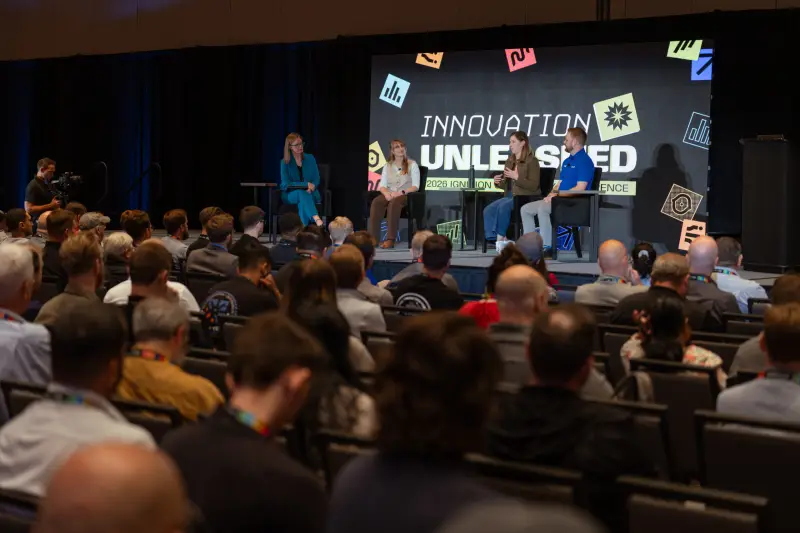
The panel, “Avoiding Million-Dollar Mistakes in Automation Projects,” brought together Elizabeth Reed, DMC’s Director of SCADA and MES, Cassy Gardner of E Tech Group and Ryan Crownover of Vertech. Their examples point to a common pattern: small gaps in planning can become expensive once design and implementation are underway.
Start with the operational outcome
Before selecting features or technology, a project team needs to agree on the problem it is solving and how it will recognize success. That outcome might be higher production, better access to operational data, less downtime or delivery within a demanding schedule. The specific goal gives stakeholders a way to assess proposed requirements and make trade-offs as the work develops.
Reed described a disconnect between technical requirements and business justification as an early warning sign. “Engineers can get excited about the technical solution, but ultimately, project success needs to tie back to business value,” she said.
Requirements can also preserve room for good engineering judgment. When practical, they should describe the intended result rather than prescribe the exact mechanism. That lets an integrator consider different ways to meet the need while keeping design decisions connected to the business objective.

Bring operators and subject matter experts in early
A requirement can look complete on paper while missing how a facility actually runs. One example from the panel involved a project that had reached a 90% FAT review before the integration team met Jo, a longtime employee with detailed knowledge of the site’s operations and users’ needs. The panelists said earlier involvement could have changed substantial parts of the system design.
The practical lesson is to identify the people who know the process at the start. Operators and subject matter experts can explain daily work, exceptions and constraints that may not appear in formal specifications. Engineering, operations, IT and other affected groups also need a chance to contribute. Their input can expose missing needs while changes are still easier to accommodate.
Match project management to the work
Waterfall and Agile each suit different conditions. Waterfall is a good fit when requirements are stable and tasks follow a predictable sequence: completing one stage is unlikely to alter the next. The panel cited traditional PLC and controls work as a setting where this structured approach is often used.
Agile can work well for software-heavy Ignition applications, where feedback from one increment may change what the team builds next. Iterative development lets a team prioritize functions, review them with users and adapt the plan. That flexibility depends on active customer participation and a longer-term roadmap; without those, near-term choices can create complications later.
Reed noted that Ignition applications sit above the control layer, where PLC work may follow a more sequential process. DMC uses Agile on many projects, she said, but the method should reflect the application, the intended outcome and the customer’s capacity to take part.
Keep a destination in view during incremental development
An iterative plan still needs a picture of where the system is headed. The roadmap can change as teams learn more, but sharing future goals gives developers context for architecture decisions. A feature that seems straightforward in isolation may constrain later additions or make them more expensive if the wider direction is unknown.
Ignition’s flexibility makes this especially relevant: a custom application may be technically possible without being a sound choice for the customer. Complexity, maintainability, risk and total cost of ownership belong in the decision alongside whether the feature can be built. The panel’s point is to assess the cost of supporting a design over time, not only the effort to implement it.
Get integration expertise before choices harden
As a project advances, changing infrastructure, architecture or technology choices can become more costly. Panelists described cases where usable infrastructure was removed before an automation plan was established, and where early technology decisions limited what a customer could later implement economically.
Reed said some customers develop proofs of concept or even production systems before asking an integration partner to help scale them. By then, technical debt may already be adding to ownership costs. Bringing an integrator in early can help assess requirements, architecture, technology options and project risks while decisions are still open.
A front-end engineering and design (FEED) study is one way to organize that work before implementation. It can document requirements, identify stakeholders and business outcomes, compare technical options and establish a clearer plan. That preparation gives the project team a stronger basis for design and helps reveal assumptions that would be more expensive to revisit later.
Track the small decisions
The panel’s central takeaway is that major overruns can build from a series of modest decisions rather than one dramatic failure. Clear priorities, stakeholder input, an appropriate project method and a roadmap all help teams spot problems while they are less costly to address. Recording decisions and considering their budget and lifecycle effects as the project evolves can keep those small choices from accumulating into a much larger bill.